
Make Clothes Last Longer: Wash, Dry, Mend, Store


Most of us wear a garment fewer times than people did about 15 years ago. And the habits that shorten its life are mostly small ones.
You know the feeling. A favorite top fades, a sweater pills, or your jeans lose their shape long before you are tired of them. Then you spend money on a replacement.
The good news is that you can make clothes last longer without special gear or a big budget. Most of the damage comes from how we wash, dry, store and repair our clothes.
In this guide, you will learn six habits. They cover washing, drying, fabric care, mending, storage and smarter buying. You will also get a simple way to track whether it is working.
One honest note first. No one can promise you will double a garment’s life. But here is what the evidence supports, and what you can start doing this week. These clothing care tips are simple, and each one adds up.
Why Do Clothes Wear Out So Fast?

Clothes wear out from friction, heat, harsh washing and small damage that gets ignored. Fast fashion plays a part too, since many pieces are made cheaply. But your habits matter just as much.
Here is why it is worth fixing:
- Research suggests that wearing a piece nine months longer can cut its carbon, water and waste footprint by roughly a fifth to a third.
- Wearing a garment twice as often could cut its emissions by more than 40%.
- For jeans, about a quarter of the water use and a big share of the climate impact come from washing them at home.
These numbers come from models, so treat them as estimates. But the message is clear. What you do after you buy something matters.
Now for the “twice as long” math. If a garment lasts about three years, nine more months is about 23% longer. That is a real gain, but it is not double.
To get close to double, you need to stack habits. Wash less, dry gently, fix problems early and buy well. Each one adds months.
| Habit | What it protects | Effort |
|---|---|---|
| Washing less | Color, shape, fabric strength | Very low |
| Air drying | Fit, stretch, seams | Low |
| Mending early | Stops small damage growing | Medium |
| Smart storage | Shape, and no moth damage | Low |
One minute action: Pick your three most worn pieces. You will focus on those first.
How to Wash Clothes Without Damaging Them
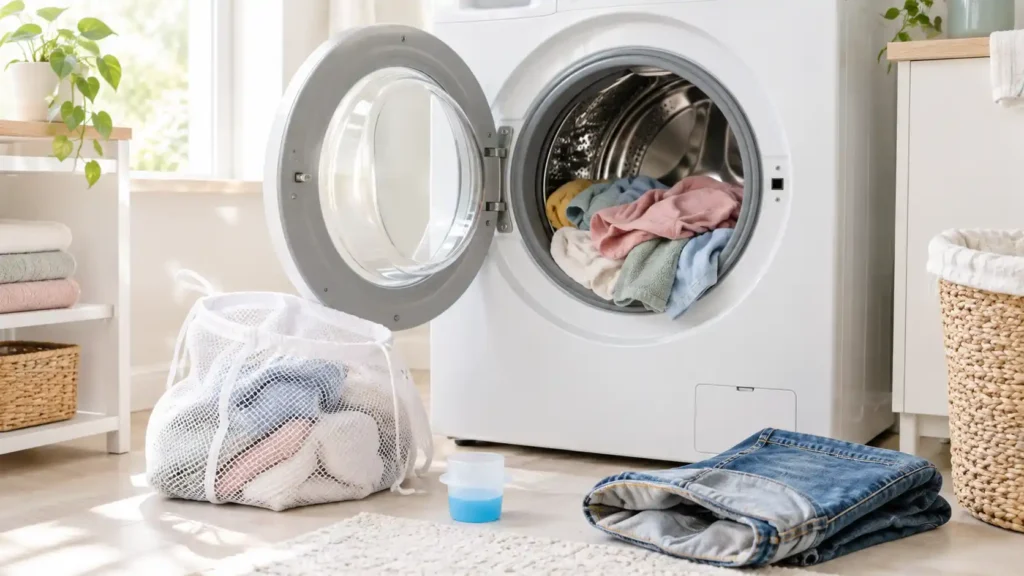
Most damage happens in the machine. Here are five changes that help, starting with the biggest.
1. Wash less often.
Clothes do not need washing after every wear. Judge by dirt and smell, not habit.
Jeans, sweaters and jackets can often go many wears between washes. For jeans, about ten wears is a good rule. Spot clean marks in between.
2. Go cooler and shorter when you can.
Lab tests show that a cool, short cycle sheds fewer fibers than a long, warm one. It also cuts color loss.
Fewer shed fibers is not the same as a longer life. But it is a good sign that the fabric is under less stress.
3. Fill the drum about three quarters full.
An overloaded machine stops clothes from moving freely. Detergent and water cannot reach everything, and rinsing gets worse.
A very small load has its own problem. Clothes rub together more with too little water around them.
4. Use less detergent.
More soap does not mean cleaner clothes. Extra detergent can stay in the fabric and leave it stiff and dull.
Measure it, and skip the fill line on the cap, which is the maximum. Use only laundry detergent in your machine. Dish soap and other swaps are not a good idea.
5. Zip, fasten and turn clothes inside out.
Open zips and hooks snag other clothes. Turning items inside out protects prints and the outer surface. Use a mesh bag for delicates, bras and lace.
When cold water is not the answer
Cold and quick is a good default. But it is not right for everything.
- Underwear, towels and gym clothes may need a warmer wash for hygiene.
- Very dirty items may need a longer or warmer cycle.
- Always check the care label first.
Hand washing is not always gentler either. Scrubbing hard can wear fabric as much as a machine does.
Your quick laundry checklist
- Check the care label.
- Sort lights and darks.
- Close zips and turn items inside out.
- Fill the drum about three quarters full.
- Measure the detergent.
- Pick a cool, short cycle if the items allow it.
One minute action: Turn down your usual wash temperature one step this week.
How to Dry Clothes the Gentle Way

Drying finishes what washing starts. Heat and tumbling are hard on fibers, and they can shrink, stretch or fade your clothes.
Air drying is the gentlest option. It is easy on seams, elastic and color. Many laundry experts suggest it whenever you can manage it.
Here are simple rules to follow:
If you use a tumble dryer
Sometimes you need one, and that is fine. Just use it well.
- Choose a low heat setting.
- Take clothes out while they are still a little damp.
- Do not overload the drum.
- Clean the lint filter after each load.
You may hear that dryer lint proves your clothes are being destroyed. It is a common claim, but it is hard to prove.
Lint comes from washing too. So focus on the simple advice above, which is to use less heat and dry less often.
One minute action: Buy or set up a drying rack in a spot with good airflow.
Clothing Care Tips for Denim, Wool and Activewear
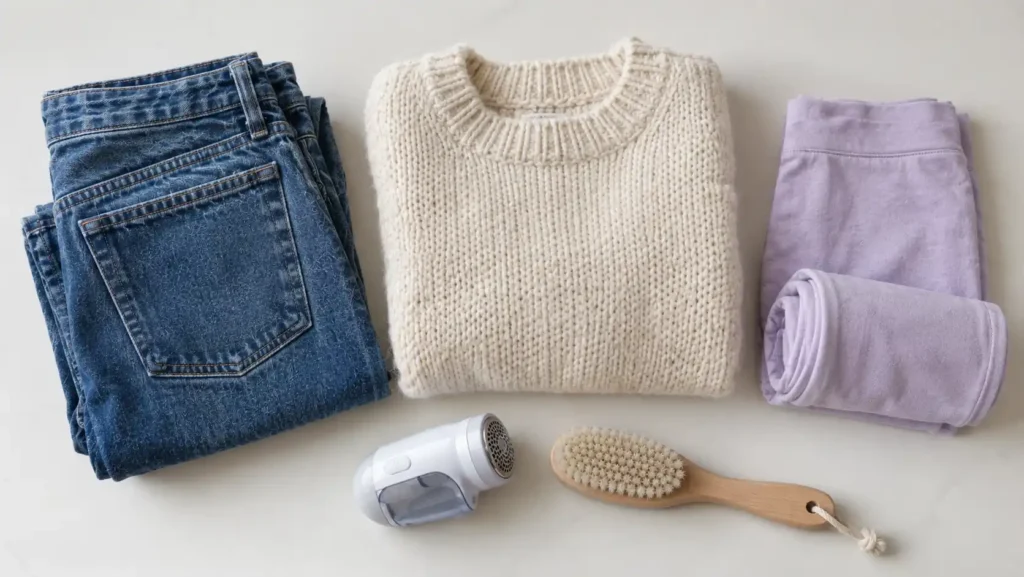
Different fabrics fail in different ways. A rule that saves one item can hurt another.
Denim
Wash it rarely. When you do, turn it inside out, use cold water and hang it to dry. This keeps the color and the fit.
Wool and knits
Wool does not need frequent washing. Air it out after wearing.
Let a wool piece rest for a day before you wear it again. This helps it return to shape.
Pilling is normal on new knits. Remove pills gently with a comb or fabric shaver. Skip the sticky lint roller, since it can pull up more fibers.
Activewear and stretch fabrics
Skip fabric softener here. It can coat the fibers and reduce how well the fabric moves sweat away. It can also trap odors.
Wash activewear in cool water and let it air dry. This protects the stretch.
Quick reference
| Fabric | Wash | Dry | Store |
|---|---|---|---|
| Denim | Cold, inside out, rarely | Hang or lay flat | Fold or hang |
| Wool and knits | Rarely, gentle cycle or by hand | Flat, away from heat | Fold, never hang |
| Activewear | Cool, no softener | Air dry | Fold or drawer |
| Cotton tees | Cool or warm, normal load | Low heat or air | Fold |
| Delicates and lace | Mesh bag, gentle cycle | Air dry | Flat or in a bag |
Always check the care label first. It is the maker’s advice for that exact item.
One minute action: Read the care label on your favorite piece and follow it exactly.
How to Mend Clothes and Store Them So They Last

Small damage grows fast. A loose button falls off, a tiny hole becomes a big one, and a open seam keeps ripping.
How to mend clothes
You do not need to be good at sewing. Start with three easy fixes.
A basic kit is cheap. You need:
- A pack of needles
- Thread in a few common colors
- Sharp small scissors
- A few spare buttons
Keep a small mending basket near your laundry area. When you spot a problem while sorting, drop the item in. Fix a few pieces in one sitting.
For bigger jobs, such as a broken zip or a torn lining, take the item to a tailor. A repair often costs far less than a replacement.
How to store clothes
Clothes also wear out while they sit in the closet. Here is how to protect them.
- Clean before storing. Food stains and body oils attract moths.
- Fold knits. Hanging them stretches the shoulders.
- Hang woven items. Shirts, coats and trousers do well on sturdy hangers.
- Use breathable bags. Cotton bags let air move. Sealed plastic can trap damp.
- Skip damp spots. Basements and cramped corners invite mold and moths.
- Do not cram your closet. Crowded clothes crease and get little air.
Rotate what you wear. Giving each piece a rest helps it keep its shape.
One minute action: Sew on one loose button today.
Make Clothes Last Twice as Long: Buy Well and Track Results
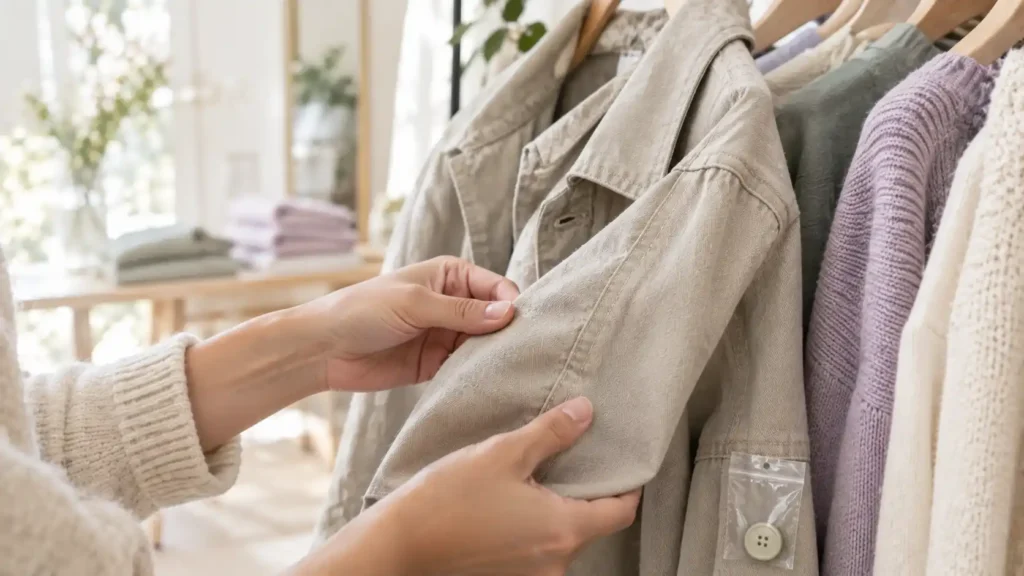
Care cannot save a poorly made item. So buying better is part of the plan.
How to spot a durable piece
Check these before you pay:
- Pull gently on a seam. It should not open or show gaps.
- Look at the stitching. Small, even stitches are a good sign.
- Hold the fabric up to the light. Very thin, see through fabric tends to wear out fast.
- Check for spare buttons or extra thread.
- Ask yourself if you could repair it easily.
Durability tests used by brands often assume a limited number of washes. Many people expect far more from their clothes. So a “passed testing” label is not a promise.
Track cost per wear
This is the simplest way to see if a purchase pays off.
Use the “wash, mend, rest or retire” check
Before you toss an item in the hamper or the bin, ask:
- Wash: Is it really dirty or smelly?
- Mend: Is there a small fix that would bring it back?
- Rest: Would airing it for a day be enough?
- Retire: Is it beyond repair? If so, pass it on or recycle it.
To track progress, note the wears of a few key pieces in your phone. Compare the count after six months. You will see what lasts.
One minute action: Write down the price of your favorite jacket and count its wears so far.
Conclusion
Here is the short version. Wash less. Go gentler. Dry with less heat. Follow the care needs of each fabric. Mend small problems early. Store clothes with care.
Each habit adds months. Together, they can bring you close to double the life. That is how you make clothes last longer and spend less on replacements.
You do not have to change everything at once. Pick one garment you love, apply three habits this week and track its wears.
Start small and keep going. Your wardrobe, and your wallet, will thank you.
FAQs
How often should I wash my jeans?
About every ten wears is a good rule, unless they are dirty or smell. Spot clean marks in between. Use cold water and hang them to dry.
Is cold water enough to get clothes clean?
For most everyday clothes, yes. Modern detergents work well in cool water. Use warmer water for underwear, towels or heavily soiled items, and follow the care label.
Does air drying really make clothes last longer?
It is easier on fibers, elastic and color than high heat and tumbling. It also helps prevent shrinking. If you use a dryer, choose low heat and remove items while slightly damp.
Can I fix a small hole without sewing skills?
Yes. Iron on patches and mending tape handle many small holes. For knits and socks, simple darning works well, and a tailor can help with larger repairs.